
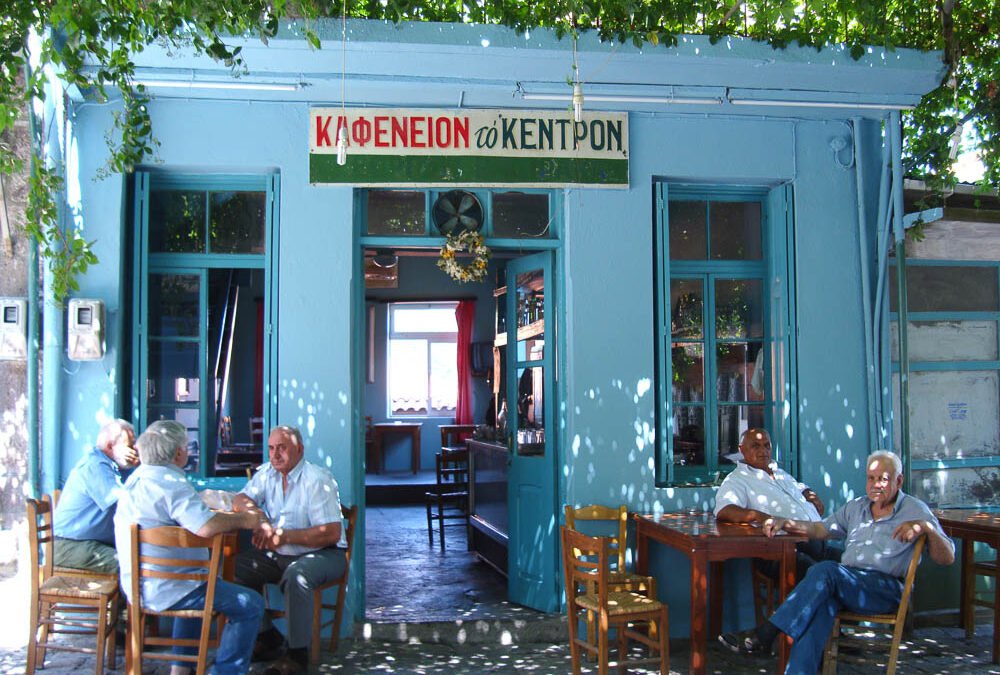
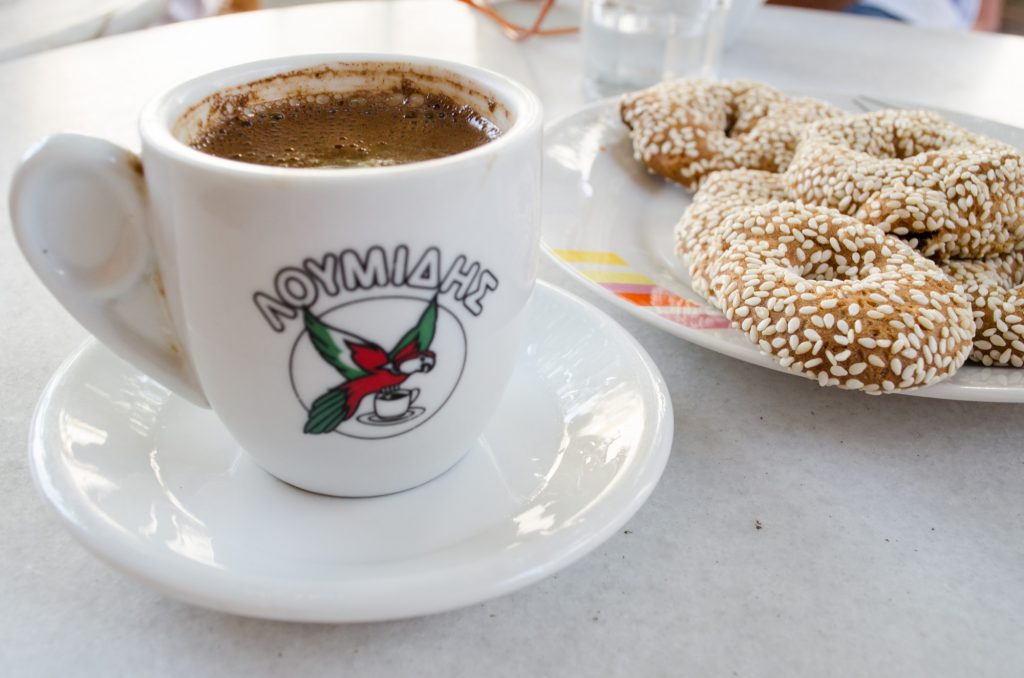
Greece has a really sturdy espresso tradition, and anybody who visits the nation will rapidly fall into step with it. Coffee right here isn’t one thing you tackle the way in which someplace else (though this has develop into well-liked too). It often implies that there’s a motive to be someplace. Greeks can, fairly actually, spend hours over a single cup, chatting, arguing, catching up, watching the sq. go by, and the invitation to “go for a espresso” (pame gia kafe) not often means a fast one. Inside a day or two, the customer finds the tempo contagious. If you begin ordering the second espresso with out a lot thought – that’s when you recognize that Greece has labored its magic on you. And that’s the place the afternoon plan quietly disappears into this air.
Nowhere is that this pastime older, or extra superbly preserved, than within the conventional kafeneio.
Simply image this. The sound of a chair scraping towards the stone. Someplace behind a counter, a small copper briki is lowered onto a flame, whereas the cafe’s proprietor stays alert, his eyes pinned on the briki – ready for the froth to rise. Two males at a marble desk have been discussing the identical olive harvest, or the identical politician, for what seems like a number of many years. It’s no accident that they’re males: for generations the kafeneio was a males’s world, the place the place the village’s menfolk went to speak, play and be advised the information, whereas the ladies took their very own espresso at residence. No one is in a rush. A glass of chilly water arrives beside the espresso as if it had at all times been there.
That is the kafeneio, the place the place Greek espresso tradition took root and the place it nonetheless feels most itself. If you wish to perceive how Greeks sit with each other, argue with each other and handle each other, you should start right here.
A Beverage Arrives and the remaining is historical past!
The story of the kafeneia begins nicely past Greece. Espresso traveled from Arabia to Egypt, then via Persia, and into the Ottoman world within the sixteenth century. The primary coffeehouse in Istanbul is mostly traced to 1555, within the Tahtakale district, the place two retailers from Damascus opened it. (Though some well-liked guides typically cite a a lot earlier date, 1475.) Inside a couple of generations, the kahvehane turned a fixture of Ottoman cities: a spot that was neither residence, nor mosque, nor store, the place a person might sit, hear, commerce information, and be educated just by proximity to better-read neighbors.
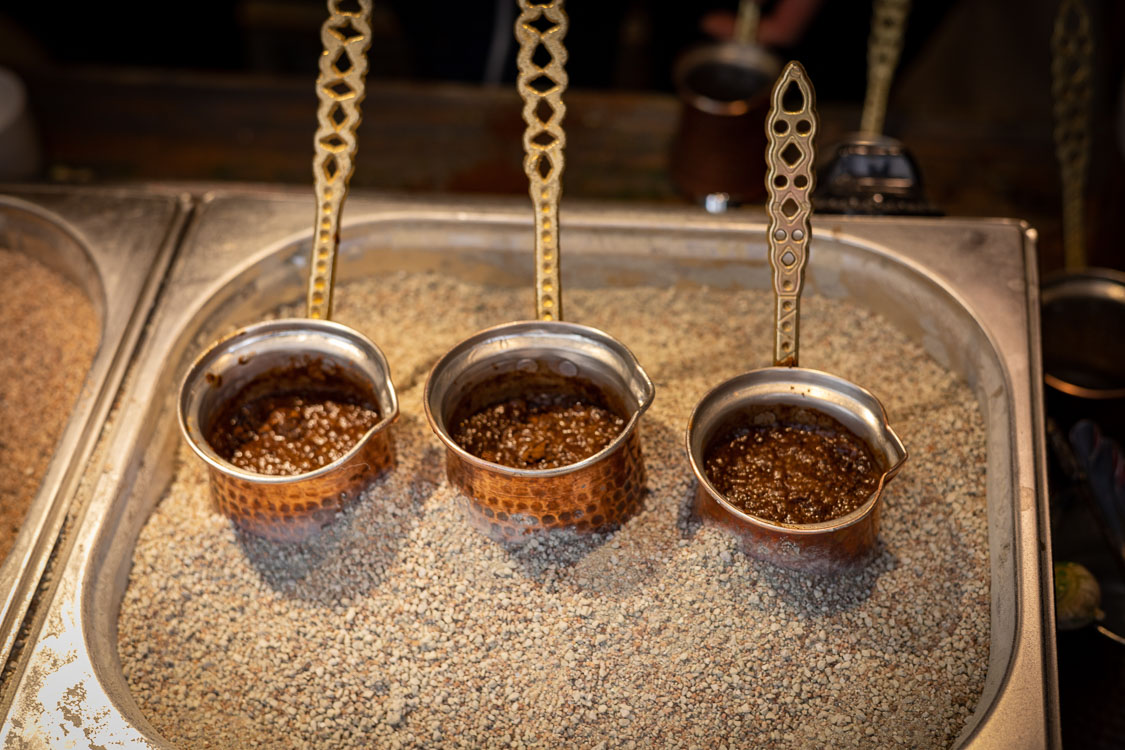
Sultans have been suspicious of such locations, and with good motive that’s. Murad IV banned them outright in 1633, and later despatched spies to hear on the tables. The bans modified little or no. By the early nineteenth century, Istanbul alone counted nicely over two thousand coffeehouses.
Greece met espresso as a part of the Ottoman Empire, and it arrived from the north. In the midst of the seventeenth century the traveler Evliya Çelebi counted 348 coffeehouses in Thessaloniki, patronized mainly by Muslims. The author Alexandros Papadiamantis positioned the unfold of the behavior to the remainder of the nation after about 1760. Athens, which was then a small city, had a handful of modest espresso locations earlier than 1821, humble issues that the Revolution completely swept away.
What got here subsequent is a really Greek transformation. Within the years after independence, as Athens grew from village to capital, the kafeneio was adopted and made the nation’s personal. The grandest of the early ones, Orea Hellas, on the nook of Ermou and Aiolou, turned the hang-out of conflict captains, officers and stressed younger males who argued about all the pieces. When Hans Christian Andersen handed via Athens within the spring of 1841, he went to this café (he shared his expertise in his journey memoir, A Poet’s Bazaar: A Journey to Greece, Turkey & Up the Danube).
Even the espresso itself went via a quiet change of identification. For a lot of the 20 th century it was merely “Turkish espresso” in Greek; the identify “Greek espresso” took maintain in earnest solely after the political tensions of the Nineteen Fifties and the Cyprus disaster of 1974. Specialist roasting and grinding retailers, the kafekopteia, appeared from the late nineteenth century, in order that the kafeneio now not needed to roast its personal beans in a pan over a fireplace. Later got here the frappé, the kafeteria, the espresso bar and the modern-day freddo espresso. The outdated kafeneio didn’t vanish, however from the Nineteen Eighties onwards it started to skinny out.
What Went On Contained in the Kafeneio
To explain the kafeneio solely as a spot to drink espresso is like describing a village sq. as a spot to face. It was a switchboard. Information of an sickness, a job that wanted fingers, a harvest that wanted a purchaser: all of it handed throughout the tables, and the information unfold quick. It was the place playing cards and tavli have been performed, the place ouzo, raki or tsipouro arrived with a small meze because the afternoon turned to night (most occasions it was earlier), the place the deputy got here to ask for votes.
 For a very long time it was additionally, virtually with out exception, a males’s world, a indisputable fact that the ladies of the village understood completely nicely and managed accordingly.
It was additionally the door via which the broader world entered. The primary phone in a village was fairly often on the kafeneio. So have been the primary radio, the primary jukebox, the primary tv. In some locations the cinema merely arrived with its projector and hung a sheet throughout the room.
The Man Who Went On the lookout for Them
George Pittas affords essentially the most thorough portrait of this world. Born in Athens in 1954, Pittas educated as a furnishings and inside designer, studied political financial system and sociology in Paris, and now lives and works on Paros, the place he’s additionally a hotelier. For years he has traveled the Aegean, writing about it. The Cafés of Greece (Ta Kafeneia tis Elladas, Koilada Lefkon, 2013) grew out of that wandering.
By his personal account, his relationship with kafeneia started virtually with out his noticing. Each time he arrived in a village to analysis one thing, the kafeneio was the primary cease. That was the place he rested, the place the primary scraps of knowledge got here from, and the place the loneliness of the stranger slowly dissolved, as one common after one other drifted over, keen to assist. Within the night he would return, worn out, to report on his day and have his instructions confirmed or gently corrected, and naturally the discoveries have been celebrated over meze and raki. What he got here to treasure most, he says, was not the analysis in any respect however the pleasure of changing into acquainted. That’s what belonging to a spot felt like, even if you’re merely passing by.
Athens, notably, doesn’t seem within the e-book. In keeping with Pittas, most of its best outdated rooms have been already gone, and the neighborhood spirit that makes a village kafeneio what it’s was weaker within the capital. He additionally has little endurance for the concept that the fashionable kafeteria is the kafeneio’s pure inheritor. It has no historical past, no reminiscence, and most significantly it doesn’t present a customer the local weather and character of Greece.
4 Kafeneia Price Visiting
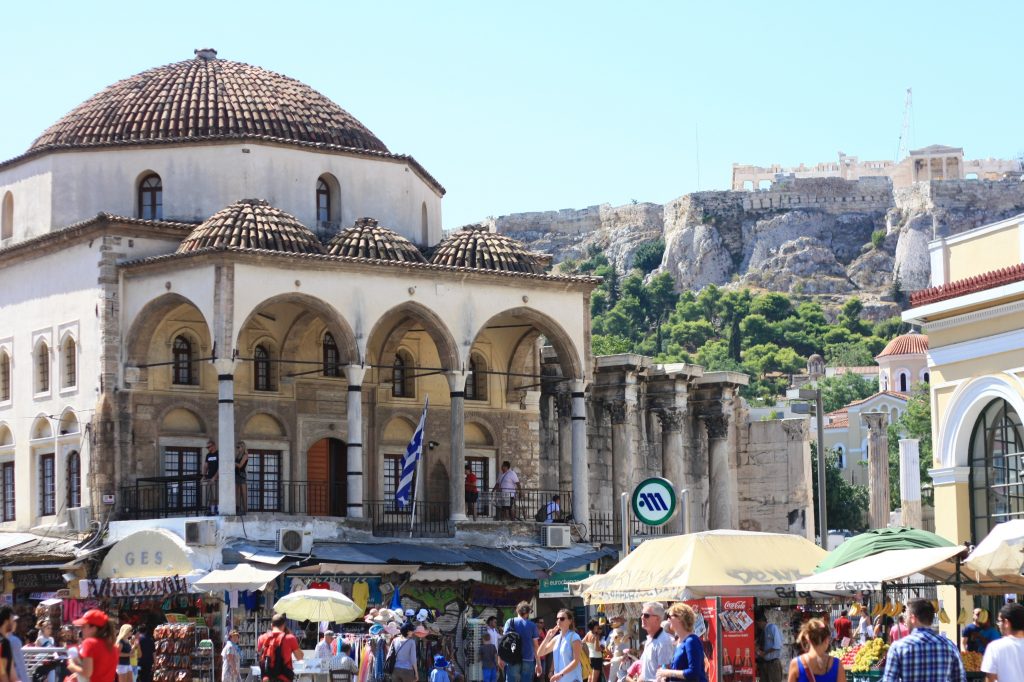 .
Orea Hellas, Athens
Tucked into the Monastiraki finish of the outdated heart, on Pandrosou on the nook of Mitropoleos, right this moment’s Orea Hellas (based in 1920) is a kafeneio with a century-long historical past, carrying the identify of its celebrated nineteenth-century ancestor. The unique kafeneio, as we talked about earlier, stood elsewhere and was visited by the well-known Danish writer Hans Christian Andersen.
Its marble tables face Plaka and the Acropolis, and the espresso typically comes with a small plate of spoon candy. It has been entered in Greece’s Nationwide Registry of Intangible Cultural Heritage, which appears proper: what’s being protected is much less a constructing than a manner of sitting.
Forlida, Lafkos, Pelion
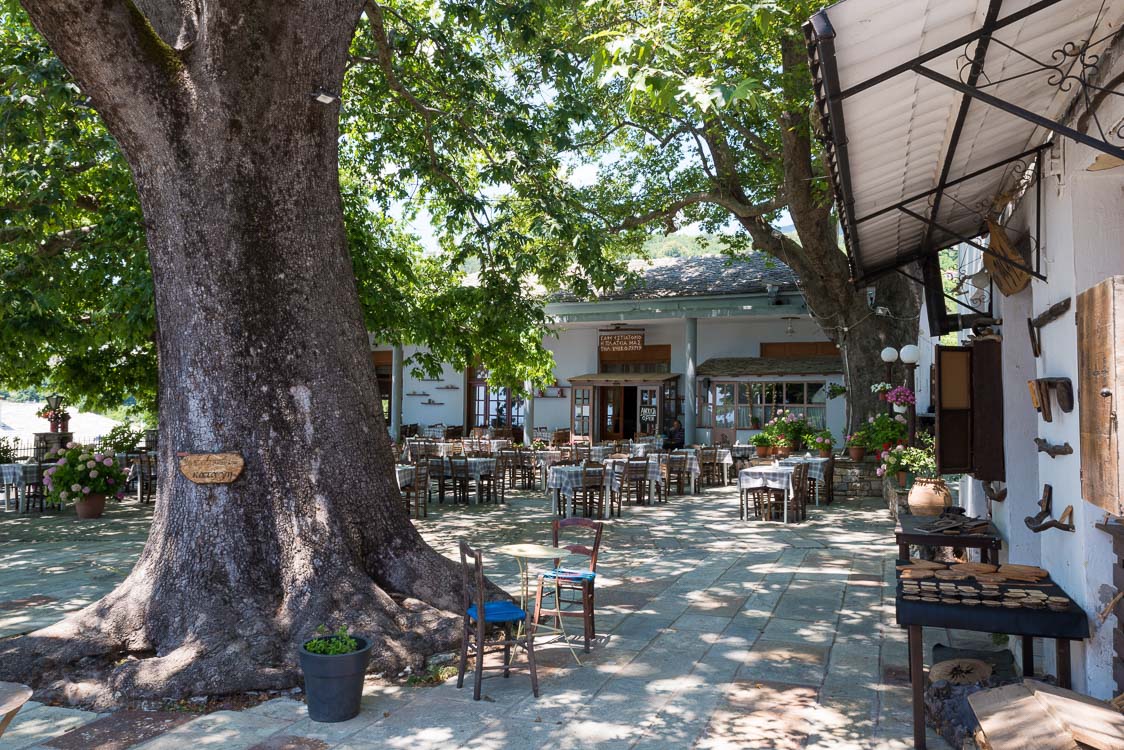
Within the shade of the aircraft timber on the village sq., the Forlida household has saved the identical café open since 1785, and right this moment Manolis Forlidas represents the seventh technology. Inside it’s darkish, with slender bands of sunshine from small home windows, a flooring of outdated cement mortar, wicker chairs, marble-topped tables and a wooden range within the center. Upstairs there was as soon as an inn, and at different occasions the identical rooms have been a butcher’s and a barber’s. It’s among the many locations Pittas photographed for his e-book.
Akanthos, Kalarrytes, Epirus
Excessive within the Tzoumerka mountains, in a village the place guests’ vehicles usually are not allowed, Napoleon Zagklis (a beautiful man with an enormous mustache) retains the household kafeneio-grocery that his great-great-grandfather based in 1840.
Within the mid-Nineteen Nineties, after greater than twenty years working for a multinational in Athens, Napoleon determined to return residence and take it over. The cabinets nonetheless maintain a couple of grocery gadgets, and a 1925 newspaper commercial reminds him that his great-grandfather additionally ran it as a cobbler’s.
Zagklis, who additionally chants within the village church (and if you’re fortunate, he’ll sing for you too). Inside his kafeneio, a small room has a settee and a few chairs the place guests collect to listen to him sing. And in Pittas’s e-book, he describes Kalarrytes as a spot the place time appears to stretch. In summer time, the village fills with guests and in winter the locals discuss amongst themselves. It’s a very quiet and lonely place in winter, certainly.
Karampoutze, Krousonas, Crete.
Within the village of Krousonas, within the Heraklion countryside on the foothills of Mount Ida, Karampoutze takes its identify from a grandfather, a blond man whom everybody known as Karampoutze, kara “black” adopted by mpoutzes, a phrase for the darkish berry of the currant: a nickname that stated the alternative of what the attention might see. The kafeneio, courting to 1966, serves completely conventional Cretan delicacies, constructed on seasonal produce from Cretan soil and the ideas of the Cretan weight-reduction plan. The cooking is formed by what the land provides that day, in a room that actually feels extra like a Cretan residence than a restaurant. In Crete particularly, the kafeneio and the desk are shut kinfolk.
Why Sit Down
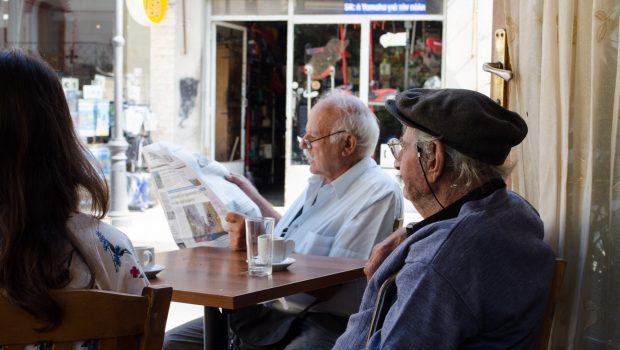 The attraction of those kafeneia is that right here nobody will attempt to impress you. One vital rule to recollect in case you do determine to go to one is to embrace the relaxed tempo. Keep just a little longer, have one other espresso and benefit from the dialog.
Ultimately, somebody will ask the place you might be from and the dialog will circulate from there. When the time comes so that you can depart, you’ll most positively know just a little extra in regards to the village, and maybe just a little extra about your self.
Order the espresso metrios, medium candy or sketo, plain. Sit by the window if there’s one. And when the water arrives with out being requested for, take it as what it’s: the primary act of Greek hospitality.

Recent Comments